

Raw + Real: that’s how I want this to go. In the Armenian culture (back to my first blog post – I am 50% Armenian), women are given 40 days postpartum to cherish the time with their baby alone and then throw a MASSIVE celebration (hey we love to party!) where cousins, aunts, uncles, friends, etc. are all invited to finally meet and celebrate this new life. The European/Russian culture typically provides new moms with a full year leave (but we will not get into that). In America, the woman is expected to “snapback” physically + mentally and go back to work after a short 12 weeks (approximately)! The postpartum journey is usually secretive. Time to expose it! 🙂
Janetta Bekman, PharmD
Founder of JanettaRxMa
Part 1: Physical Health
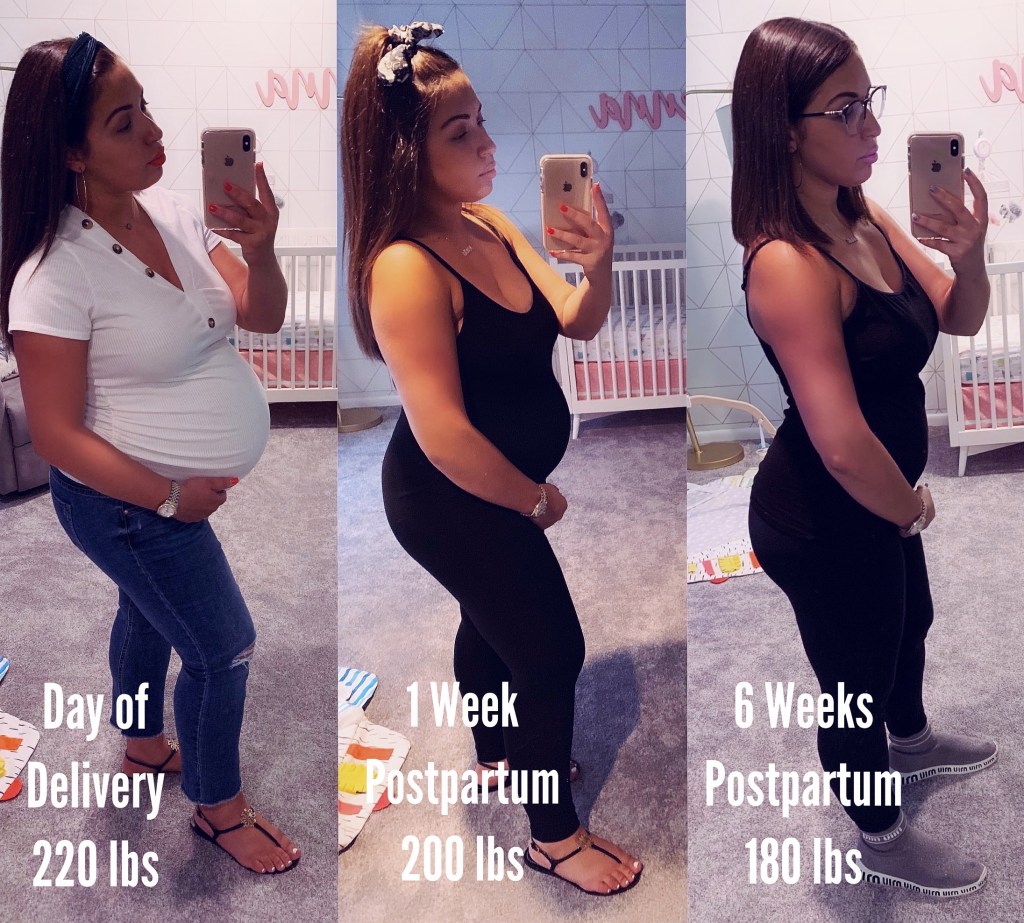
Disclaimer: I am exclusively breastfeeding (aka breastfeeding 100% of the feeds with no additional formula given) my seven week old baby girl. The ~500 calories burned per day from breastfeeding do not go unnoticed but the initial weeks of breastfeeding were MORE painful than delivery with the epidural. To note: every women heals differently [at a different rate with different symptoms] – listen to your body + your doctor! Please reference the glossary for additional medical information for bolded items with an asterisk (*).
Photo 1 – Day of Delivery (Sunday, August 25th, 2019): As seen in the image above, I was 220 pounds the day I went into labor. I was doing pretty well with gaining the appropriate amount of weight for my BMI* until the last few months of my pregnancy. My third trimester was challenging, so I could barely work out and my sweet tooth was on overdrive. I did continue to walk my Shiba Inu (named Matcha) for ~30 minutes five days per week. After labor + delivery, I expected to drop at least 20 pounds but I only lost 10 pounds (where my baby was 7 pounds 10 ounces). I was pretty disappointed to see 210 pounds on the scale 😦 I didn’t realize how pregnant I would still look AFTER I gave birth. I remember being embarrassed to take a walk with Matcha, since my neighbors would think that I still didn’t give birth. SILLY ME! Who cares what they think!? The books all mentioned leaving the hospital looking six months pregnant + they were not lying! It is important to realize that the uterus weighs two pounds + is the size of a GRAPEFRUIT right after birth. To note: breastfeeding is known to reduce the size of the uterus at quicker speed. Since oxytocin* is released during breastfeeding, your uterus contracts + your belly shrinks in size.
Photo 2 – One Week Postpartum (Sunday, September 1st, 2019): It took me one week to drop to 200 pounds. The image above clearly shows how “pregnant” I looked at one week POST delivery. Do not be ashamed of it! You brought a new life into this world and your uterus is still large. Give your body the time it needs to heal! In addition to looking pregnant, a new mom experiences significant pain. There will be tenderness of the perineum*. Since I had a second degree perineum tear, I remember attending a family get-together on this day and being in such pain that I couldn’t sit down. I had to lay down on a couch in order to ease the pain on the perineum. Some guests were even confused as to why I still felt pain. To note: be gentle on new moms! They may look great but are secretly in excruciating pain down there.
Photo 3 – Six Weeks Postpartum (Sunday, October 6th, 2019): I had my first + only postpartum OB/GYN appointment with the physician that delivered my baby at six weeks postpartum. She cleared me for exercise – yay! I dropped to 180 pounds. At this point, the uterus returns to its normal size (weighing 2 ounces). I also finally stopped using pads during this week! Yes it takes THAT long. As the lining of the uterus heals, the amount + color of the lochia* following vaginal birth changes. I used U by Kotex overnight pads during the first week, U by Kotex heavy flow pads during my second week, U by Kotex regular pads during my third week, and U by Kotex Barely There regular liners four to six weeks postpartum. To note: you are not 100% healed at six weeks postpartum. You have to continue to listen to your body. I started doing Pilates at home (one hour three days per week) as a way to ease into my exercise regimen.
Part 2: Mental Health
Being a healthcare professional, I cannot stress enough how important mental health is for everyone but especially a new mama with fluctuating hormones, lack of sleep, physical pain, and a new role as a mom.
Postpartum Blues: When I gave birth, I was running on zero sleep but on a high of emotions. I was overjoyed/relieved to bring a new life into this world. In addition, I was extremely excited to see every family member and close friend visit with balloons, flowers, treats, and lots of LOVE! 🙂 I felt like a superwoman. During my first night in the recovery room, the staff insisted on taking my baby girl so I could finally take a nap. I tried to sleep but I started to clean the room (aka organize the flowers, paperwork, and food) and read about newborn basics. I was SO happy that I couldn’t sleep. The “high” lasted a few glorious days. When I returned home, I truly felt the rush of hormones go through my body. I remember crying for NO apparent reason. This was completely foreign to me, since I wasn’t emotional at all during my pregnancy. My husband didn’t know how to react, since it wasn’t something I ever did. The “postpartum blues” occur in 9/10 women who give birth. Yes the incidence is THAT high! I was one of them. The blues begin around the third or fourth day postpartum and can last from a few hours (like mine) to a week. These feelings tend to be short-lived and go away without any treatment.
Postpartum Depression (PPD)*: While I did not develop PPD, many women do. Women need a voice. Women may need help. Chrissy Teigen (model and pop culture figure) has partnered with Allegheny Health Network (AHN) and AHN’s women’s health program #AHNwomen to launch #MyWishForMoms. The focus of this incredible initiative is to create an open conversation among women about postpartum depression (PPD) and anxiety (see YouTube video below). Last year >500,000, or 1/7, new mothers developed PPD, yet only 15% received treatment according to the American Psychological Association. Please reach out to your doctor if you are experiencing any symptoms associated with PPD – see glossary! Most importantly, let’s focus on listening and helping, instead of labeling and judging.
Part 3: Helpful Postpartum Products
To note: I have listed + linked my favorite products below, but I have tried MULTIPLE brands/styles during my postpartum recovery.
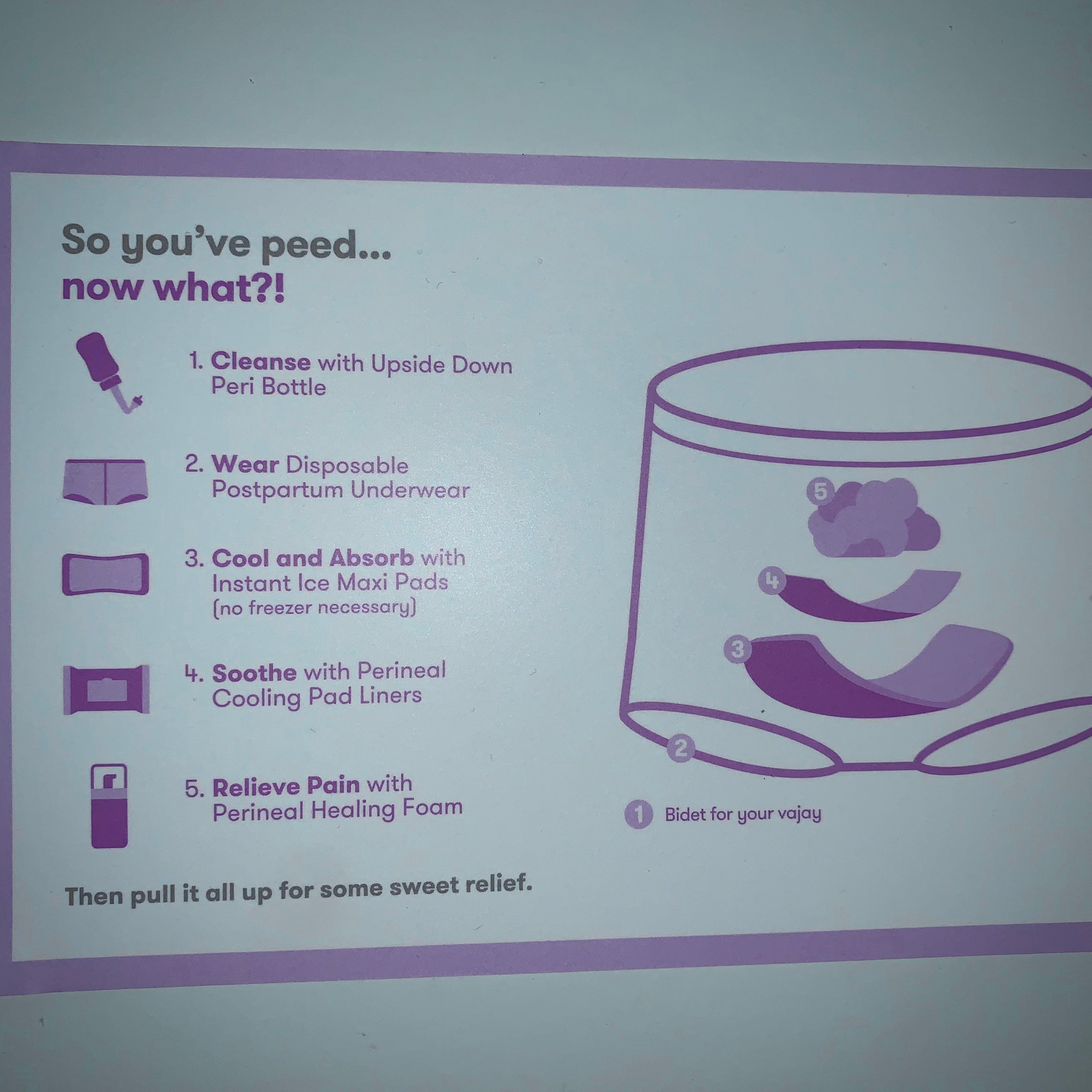
- Frida Mom Peri Bottle
- Use the hospital one or the one linked above
- Cleanse after every restroom visit with warm water!
- I used this bottle for three weeks postpartum.
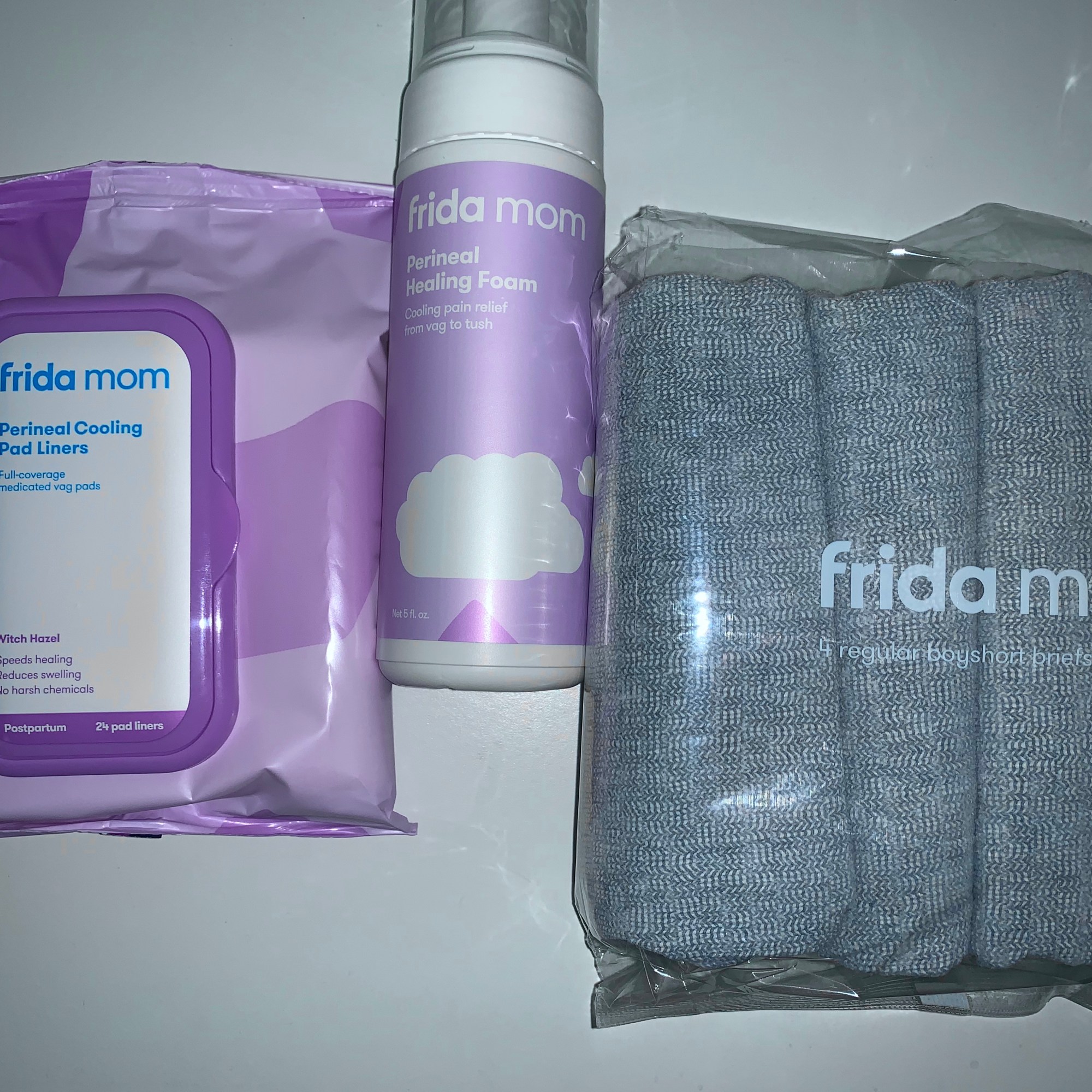
- Frida Mom Disposable Postpartum Underwear
- Mesh-free mess-free recovery wear that stretches well!
- I only used one pack (8 count) in the first week postpartum and then switched to my underwear.
- Frida Mom Perineal Cooling Pad Liners
- Full coverage medicated vaginal pads with no harsh chemicals
- Made with witch hazel to speed healing + reduce swelling
- I used two containers (aka 48 pads) for three weeks postpartum. I used a new pad liner every time I used the restroom.
- Frida Mom Perineal Healing Foam
- Cooling pain relief with no harsh chemicals
- Made with witch hazel to speed healing + reduce swelling
- I used two bottles (each one is 5 fl. oz.) for three weeks postpartum. I added the foam to my pad every time I used the restroom.
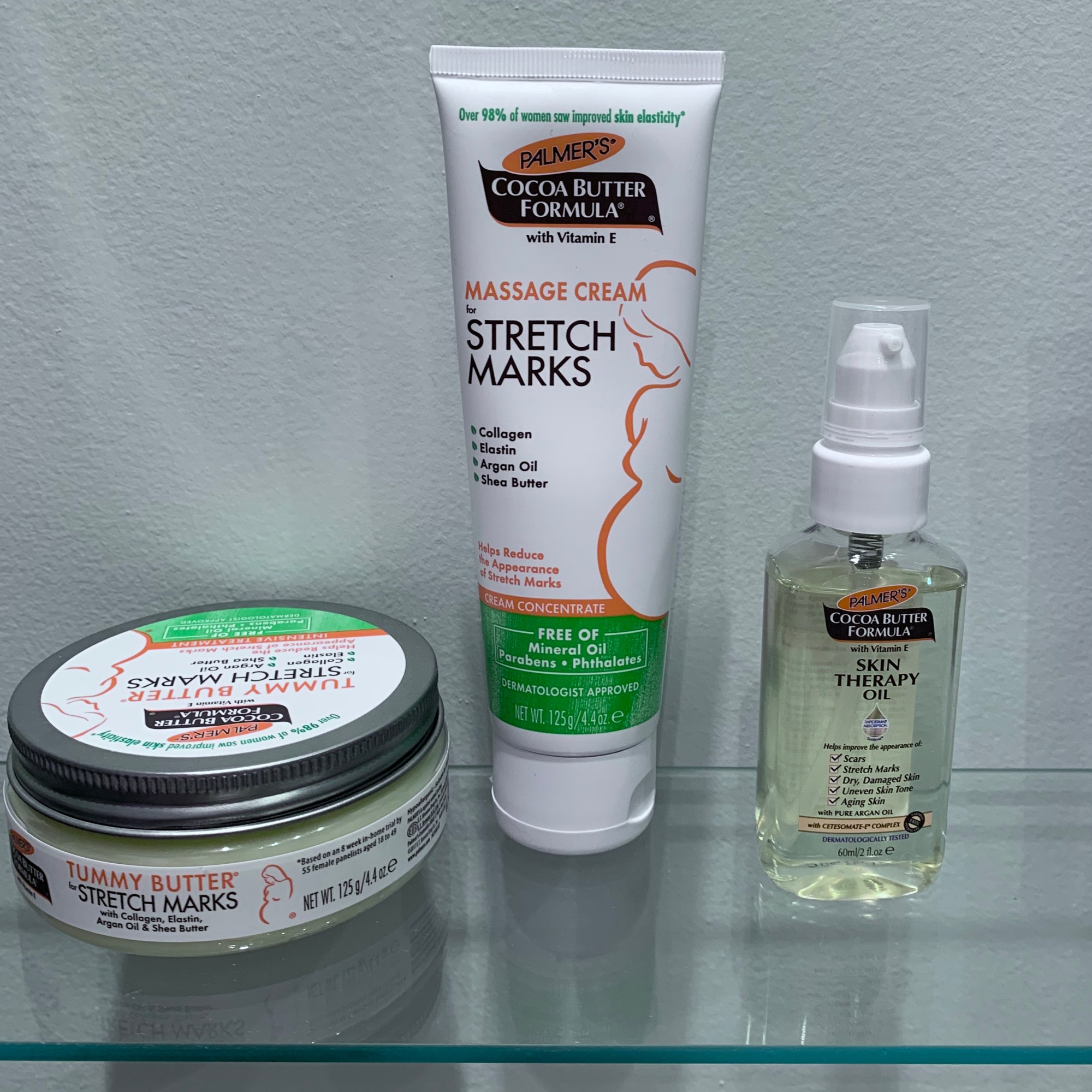
- Cocoa Butter Formula (with Vitamin E) Skin Therapy Oil
- Helps improve the appearance of stretch marks
- I am still using this stuff every day in the morning and at night – it seems to be working 🙂
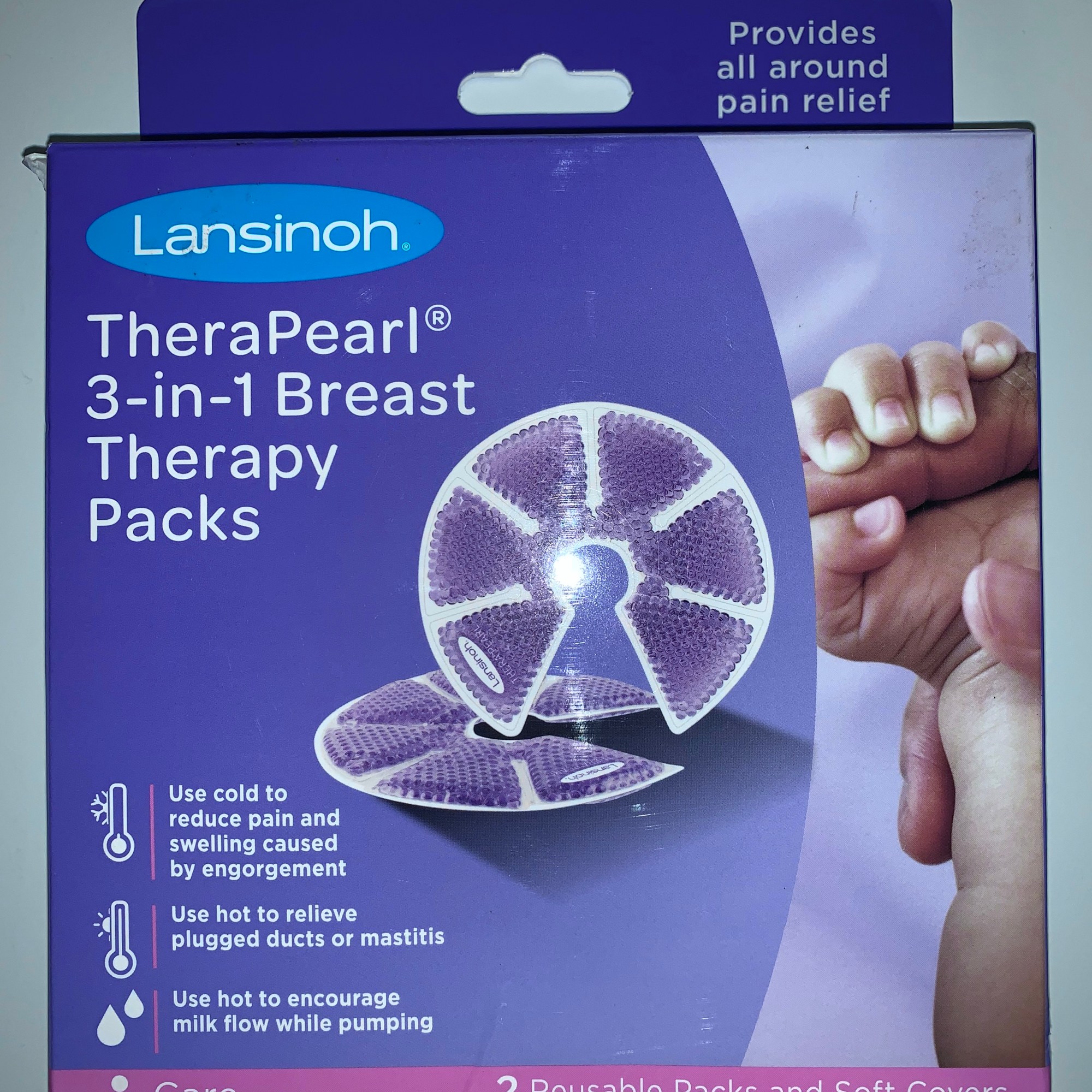
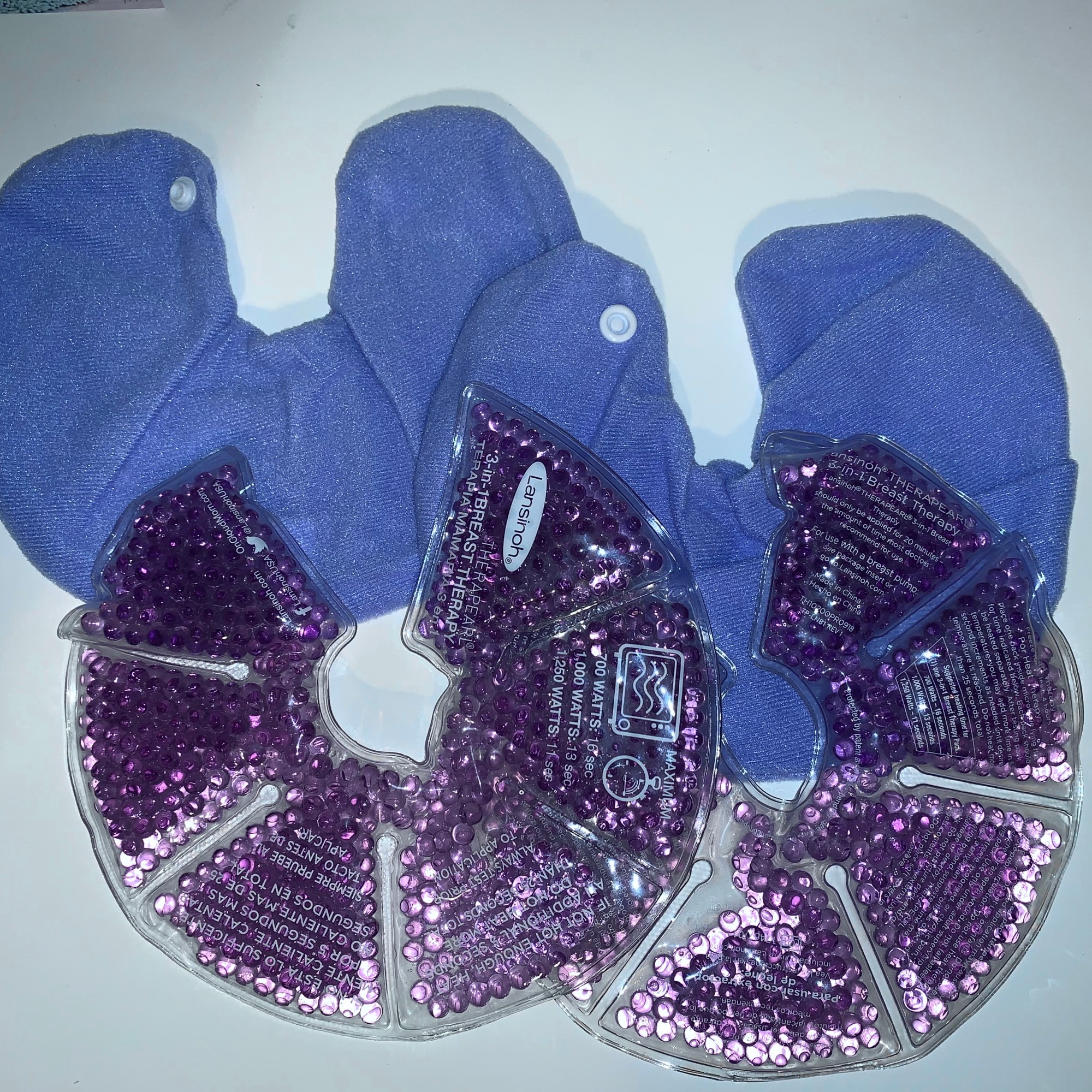
- Lansinoh TheraPearl 3-in-1 Breast Therapy Packs
- Two reusable packs + soft covers
- Use cold to reduce pain + swelling caused by engorgement (freeze for four hours before placing into soft cover)
- Use hot to relieve plugged ducts or mastitis (microwave according to the instructions before placing into soft cover)
- Use hot to encourage milk flow while pumping
- I heavily relied on this in the first two weeks of breastfeeding.
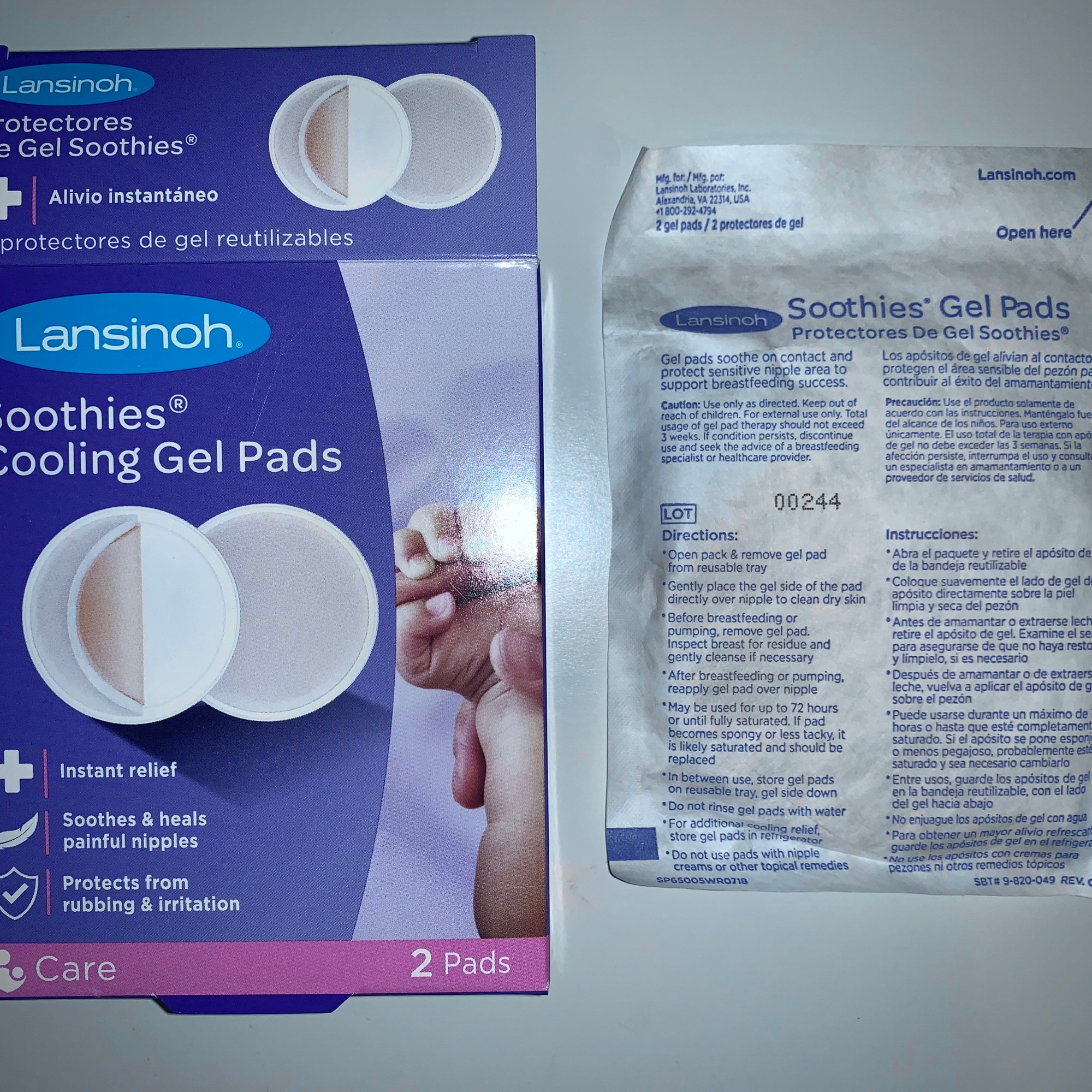
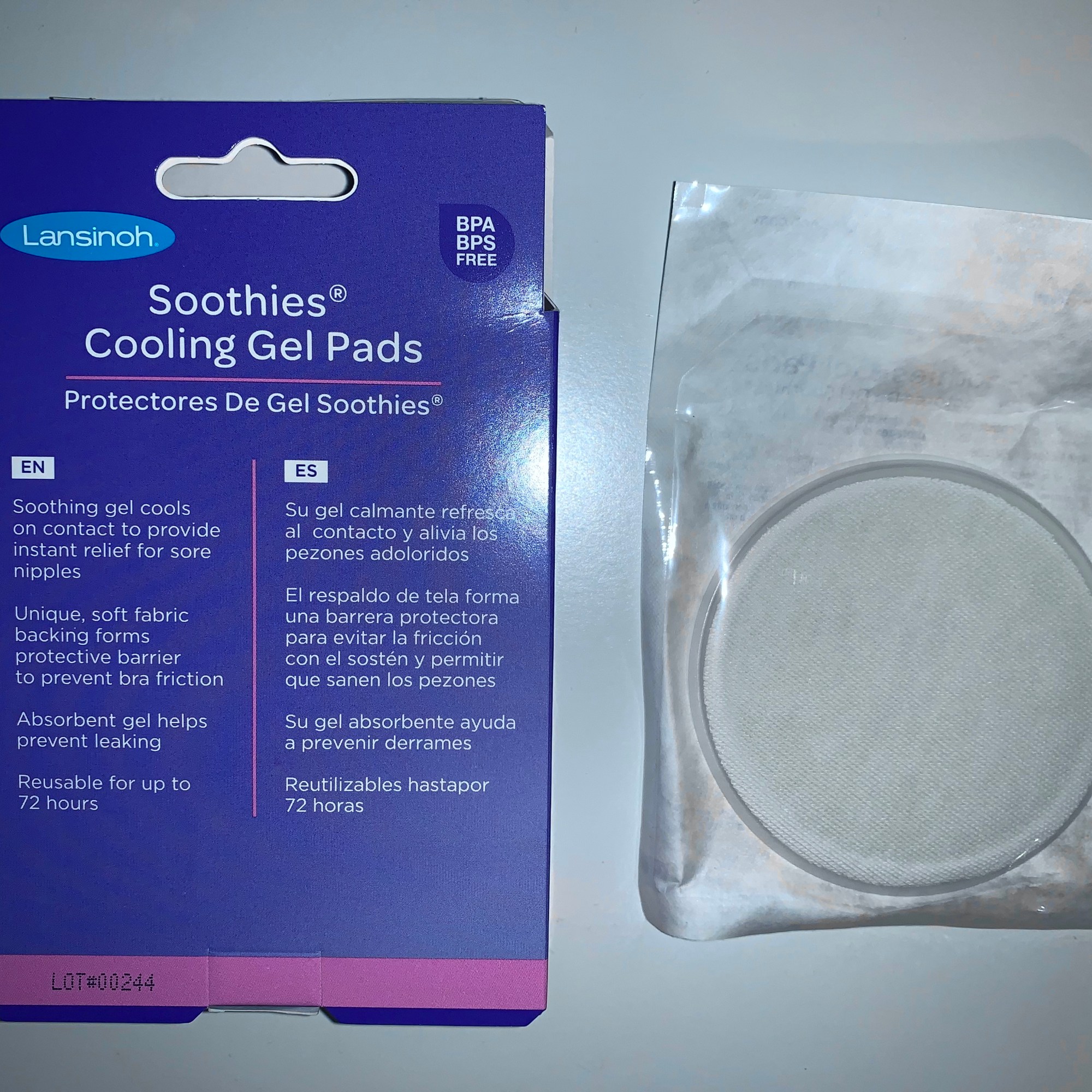
- Lansinoh Soothies Cooling Gel Pads
- Gel pads soothe on contact + protect sensitive nipple area to support breastfeeding success
- I bought two packs of these and also heavily relied on these during my first two weeks of breastfeeding.
- Medela Nipple Shield
- To note: I did not use these since they only intensified my pain when my nipples were bleeding.
- Other females found these very helpful to assist with latch-on difficulties.
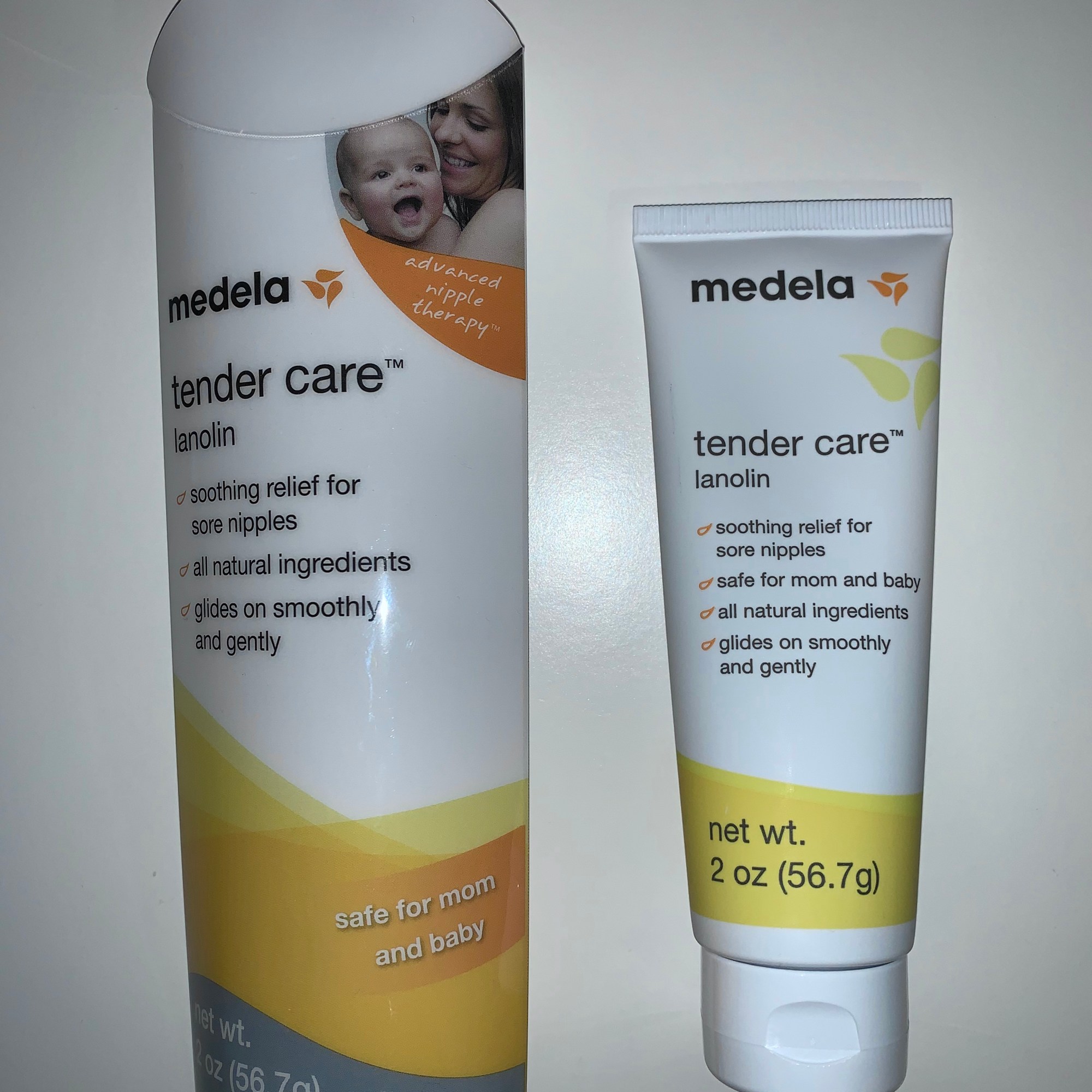
- Medela Lanolin Cream
- Offers soothing relief + provides protection to tender nipples
- All natural ingredients that are safe for mom + baby
- Glides on smoothly + gently
- Caution: This will stain your clothes (oily and yellow in color). Please wear the nursing pads to avoid ruining your attire!
- I still use this product, since I am still breastfeeding every 2-4 hours (maybe every 5-6 hours overnight!) and the soreness is REAL 🙂
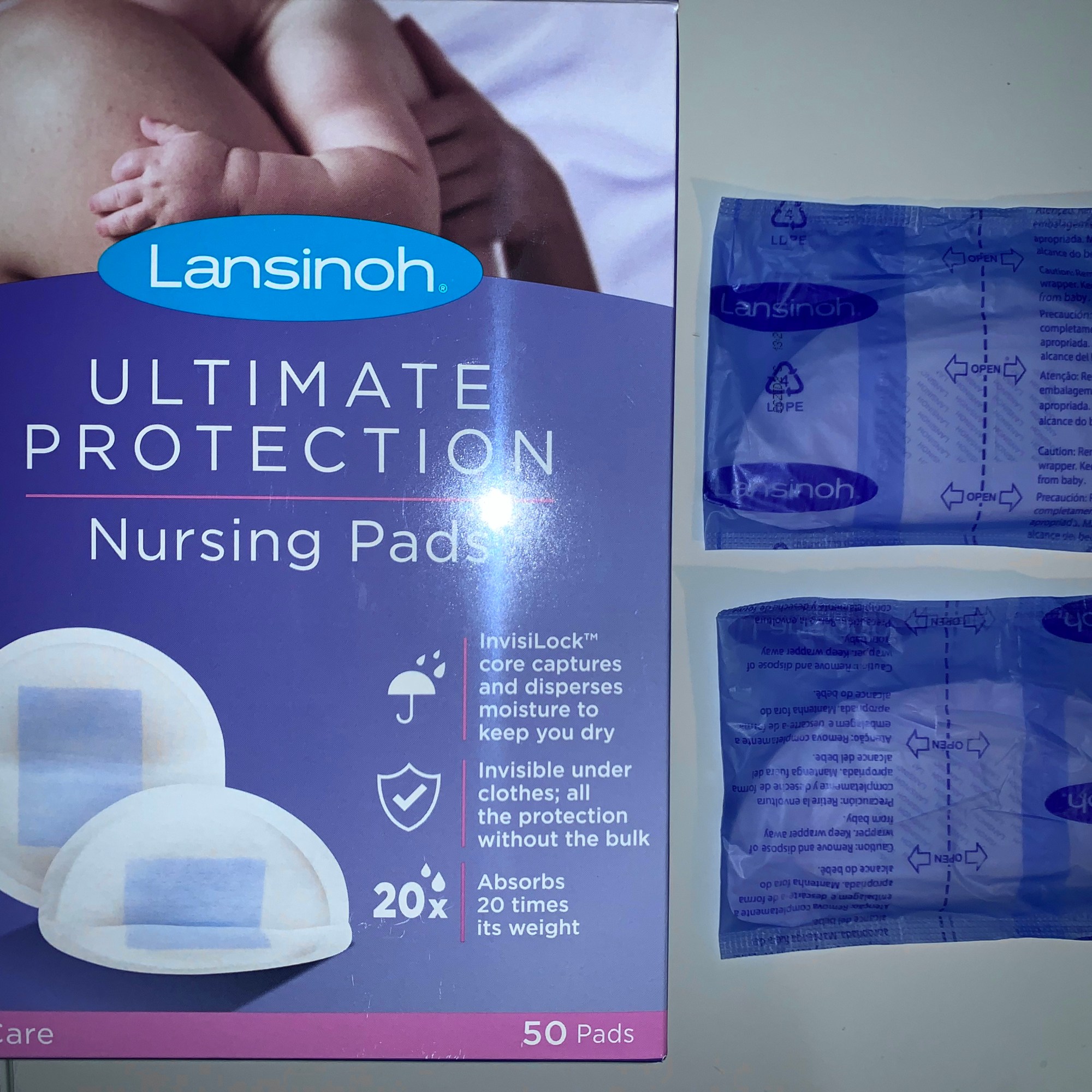
- Lansinoh Nursing Pads
- I fly through this product. I use around one pack (50 pads) every two weeks.
- Don’t forget to order your breast pump through insurance!
- It helps to have one at your house ahead of time. I would recommend to order one in your final trimester of pregnancy.
- Additional items:
- Vaginal Pads (varies based on preferred Brand and required size since everyone has varying levels of lochia*)
- Please reference Photo 3 in Part 1 section for what I used and when!
- Stool Softener (varies based on required dose)
- To note: Avoid using the 2-in-1 Colace with Senna (stimulant laxative), since Senna can affect the baby (cause increased diarrhea) for breastfeeding mothers.
- Ibuprofen (varies based on need for prescription or over-the-counter dose)
- To note: Do not use all of the refills on your prescription if you feel better! They prescribe a standard dose but feel free to reduce the dose as needed. Pain medication is different from antibiotics, since a full course of antibiotic therapy is always recommended to be completed.
- Vaginal Pads (varies based on preferred Brand and required size since everyone has varying levels of lochia*)
Part 4: Glossary*
- Body Mass Index (BMI): body fat level
- Calculation: 703 x weight (lbs) / [height (in)]2 (or use Google!)
- Recommended weight gain during pregnancy using pre-pregnancy BMI:
- BMI <18.5 (Underweight): 28-40 pounds
- BMI 18.5-24.9 (Normal or Health Weight): 25-35 pounds
- BMI 25-29.9 (Overweight): 15-25 pounds
- BMI >30 (Obese): 11-20 pounds
- To note: I am in the overweight category with a BMI of 28. I gained double the recommended weight gain, but I never had a physician mention that to me. They all told me that my weight gain is “fine.“
- Lochia: vaginal drainage following birth
- 1st day: similar to a period (bleed a lot!)
- 2-4 days: watery and pale, pink or brown-tinged
- 10-14 days: white or yellowish-white
- 2-4 weeks: very little but varies among mothers
- To note: I bled a lot more than most mothers and wore large pads for the first three weeks postpartum. I was also told to call the nurse or healthcare professional if I soaked more than 1 pad/hour (but I was pretty close to it) and passed large clots or tissue larger than a golf ball (where I had clots close to quarter size).
- Oxytocin: hormone secreted by the posterior lobe of the pituitary gland (a pea-sized structure at the base of the brain)
- It is known as the “cuddle hormone” or the “love hormone,” because it is released when people snuggle up or bond socially.
- It can cause or strengthen contractions during labor + delivery.
- It can control bleeding after childbirth.
- It stimulates the uterine muscles to contract.
- Perineum: the area around the vagina and rectum
- First degree tear: only skin is involved
- Second degree tear: involve skin + muscle underneath the skin (require a few stitches to close + heal within 2-3 weeks)
- Third degree tear: involves the skin, perineal muscle + muscle that surrounds the anus
- Fourth degree tear: involves the skin, perineal muscle, anal sphincter + tissue that lines the rectum
- To note: I had a second degree tear and it was painful for a long time! I could barely sit in a chair for the first two weeks. I made the awful mistake of walking my dog two days after delivery, which only resulted in more pain – BIG mistake!
- Postpartum: first six weeks after giving birth
- It is known as the “recovery” period for a reason 🙂
- Postpartum Depression (PPD): when the “blues” last longer than two weeks and get worse
- Contact your doctor if you have any of these signs or symptoms:
- Constant anxiety or crying
- Difficulty sleeping or sleeping too much
- Difficulty focusing/concentrating
- Lack of interest in yourself, baby or others
- Complete loss of control
- Exhaustion but unable to sleep
- Feeling lonely/withdrawn
- Change in appetite
- Mood swings
- Contact your doctor if you have any of these signs or symptoms:
- Uterus: muscular organ located in the female pelvis between the bladder and rectum
- It nourishes the developing fetus prior to birth.
Thank you for reading about my postpartum journey before being cleared to exercise! It isn’t easy to expose your weight to the world, but transparency is key. I want to be open with you all. I hope it helps even in the slightest way 🙂
Follow @JanettaRxMa on Instagram for additional photos + Insta stories!
 JanettaRxMa